
Yin Yoga and Restorative Yoga Are Not the Same — and Here’s Why
Yin Yoga and Restorative Yoga are often spoken about as if they are interchangeable. From the outside, they can look almost identical: floor-based postures, generous use of props, long holds, and a sense of stillness. Yet beneath the surface, these two practices are doing very different things in the body, nervous system, and mind.
Understanding the difference matters — especially if you’re choosing classes, managing stress, recovering from burnout, or training to teach at an experienced Perth yoga studio.
Why Yin Yoga and Restorative Yoga Get Confused
Both practices are slower-paced and grounded. Both often use bolsters, blankets, and blocks. And both can leave you feeling calmer after class.
But similarity in appearance doesn’t mean similarity in intention.
Restorative Yoga is designed to remove stress from the body.
Yin Yoga, by contrast, intentionally applies stress to the body — in a mindful, therapeutic way.
They are, in many ways, opposites.
What Is Restorative Yoga?
Restorative Yoga is a deeply nourishing practice that supports the body’s natural ability to rest, repair, and rebalance. Its primary aim is to activate the parasympathetic nervous system — the “rest and digest” state that allows true healing to occur.
In a Restorative Yoga class, postures are fully supported using props so that no muscular effort is required. The body is held in comfort for extended periods — typically anywhere from 5 to 20 minutes per pose, sometimes longer — allowing the nervous system to soften and settle.
As the body rests, the breath naturally deepens. As the breath deepens, the mind begins to quiet. This is where restorative yoga works its quiet magic.
There is nothing to achieve, stretch, or fix.
The only invitation is to notice the breath and rest in stillness.
This practice gently dismantles the belief that we must always do more to feel better. Instead, it teaches us that rest itself is transformative.
Benefits of Restorative Yoga
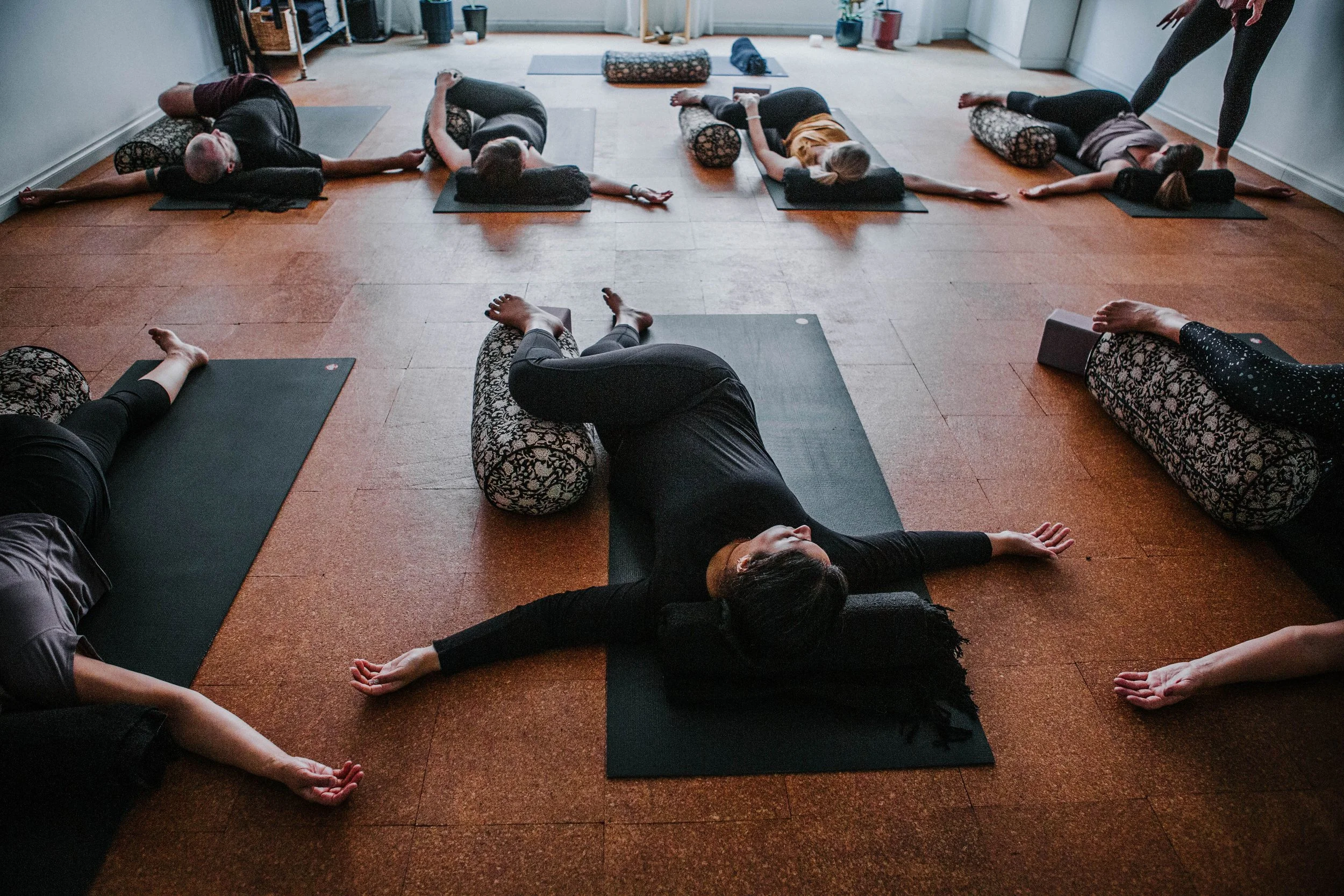
Restorative Yoga is widely known for supporting:
Better sleep
Reduced stress and anxiety
Nervous system regulation
Relief from chronic pain and fatigue
Improved mood and emotional wellbeing
Because it is non-weight bearing and fully supported, Restorative Yoga is accessible to almost every body, making it a cornerstone practice at many established Perth yoga studios.
For me, restorative yoga feels like a warm hug you give yourself — unhurried, held, and deeply reassuring.
What Is Yin Yoga?
Yin Yoga works in a very different way.
Rather than encouraging complete relaxation, Yin Yoga intentionally applies gentle, sustained stress to the deeper connective tissues of the body — including ligaments, joints, bones, and fascia.
Yin postures are usually held for around 3 to 5 minutes and rely on gravity rather than muscular engagement. While the practice is also mostly floor-based, the experience can feel quite intense — physically, mentally, or emotionally.
Yin Yoga primarily targets the lower body: the hips, pelvis, and lower spine — areas that tend to store tension and stagnation.
Props are still used, but with a different intention. In Yin Yoga, props help make shapes accessible so that practitioners can stay longer in the posture and meet sensation safely.
Yin as a Practice of Enquiry
Yin Yoga is less about relaxation and more about awareness.
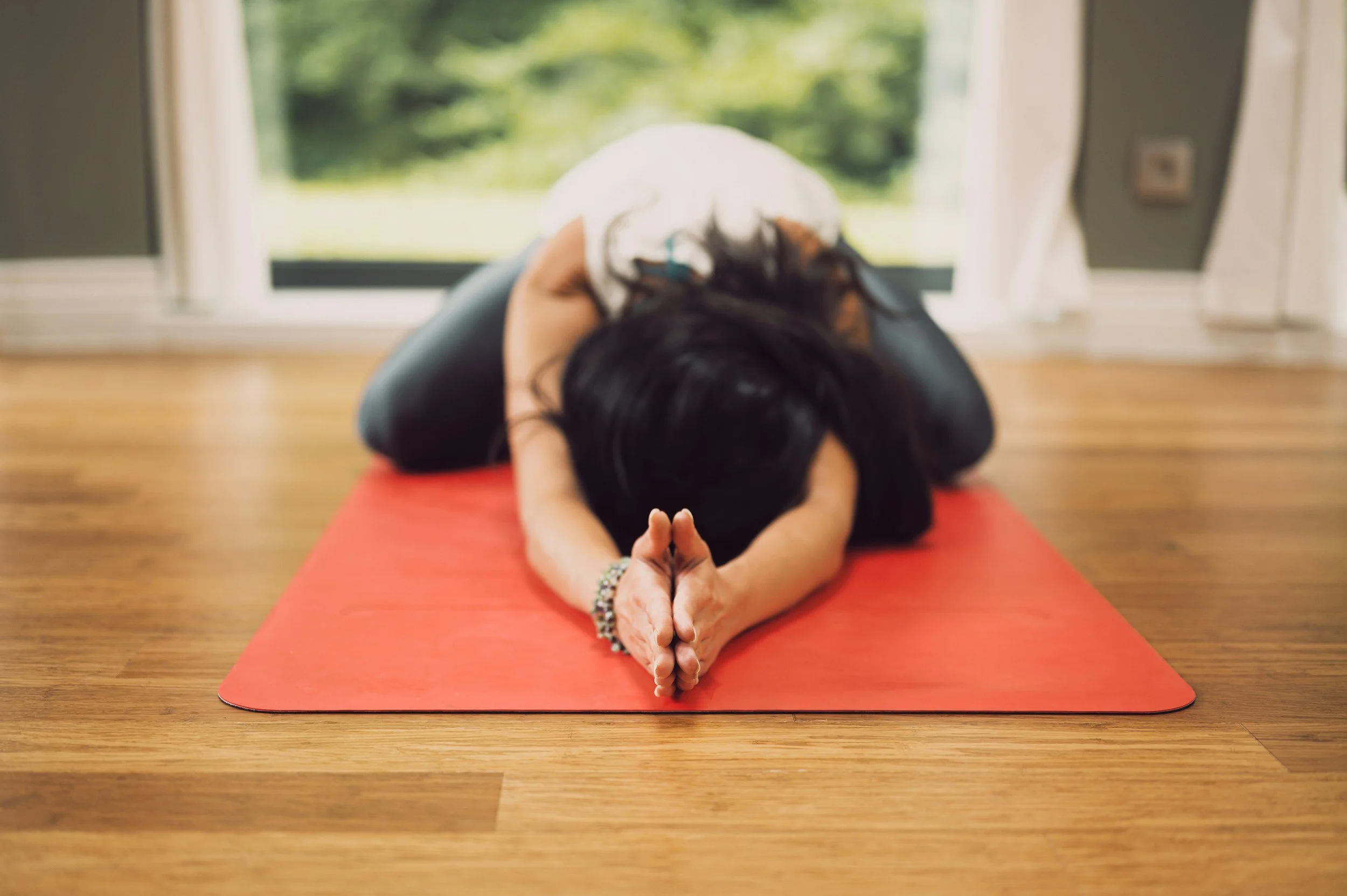
Sensations arise. Thoughts surface. Emotions may follow. The practice invites us to observe these experiences with curiosity rather than resistance.
Through Yin Yoga, practitioners often experience:
Improved joint mobility
Increased circulation
Greater mental clarity
A deeper relationship with sensation and stillness
Reduced stress over time
Although some yin postures resemble hatha yoga shapes, yin uses its own naming conventions to reflect its distinct lineage and purpose — reinforcing that Yin, Restorative, and Hatha Yoga are fundamentally different practices.
Two Practices, Two Intentions
While Yin Yoga and Restorative Yoga can share some benefits, their methods and philosophical foundations are completely different.
Restorative Yoga removes stress from the system to support deep rest and healing
Yin Yoga applies stress to the tissues to encourage adaptation, resilience, and insight
Both offer stillness.
Both offer perspective.
Both provide relief from the overstimulation and exhaustion of modern life.
And both are powerful in the right context.
Whether you are attending classes, deepening your personal practice, or exploring Restorative Yoga and Yoga Nidra Teacher Training in Perth, understanding these distinctions allows you to choose the practice — or the teaching pathway — that truly meets your needs.
Whichever you choose, may your practice offer you space to pause, feel, and return home to yourself.
Enjoy your yoga.